What is AI Washing?
Introduction: The Great AI Gold Rush
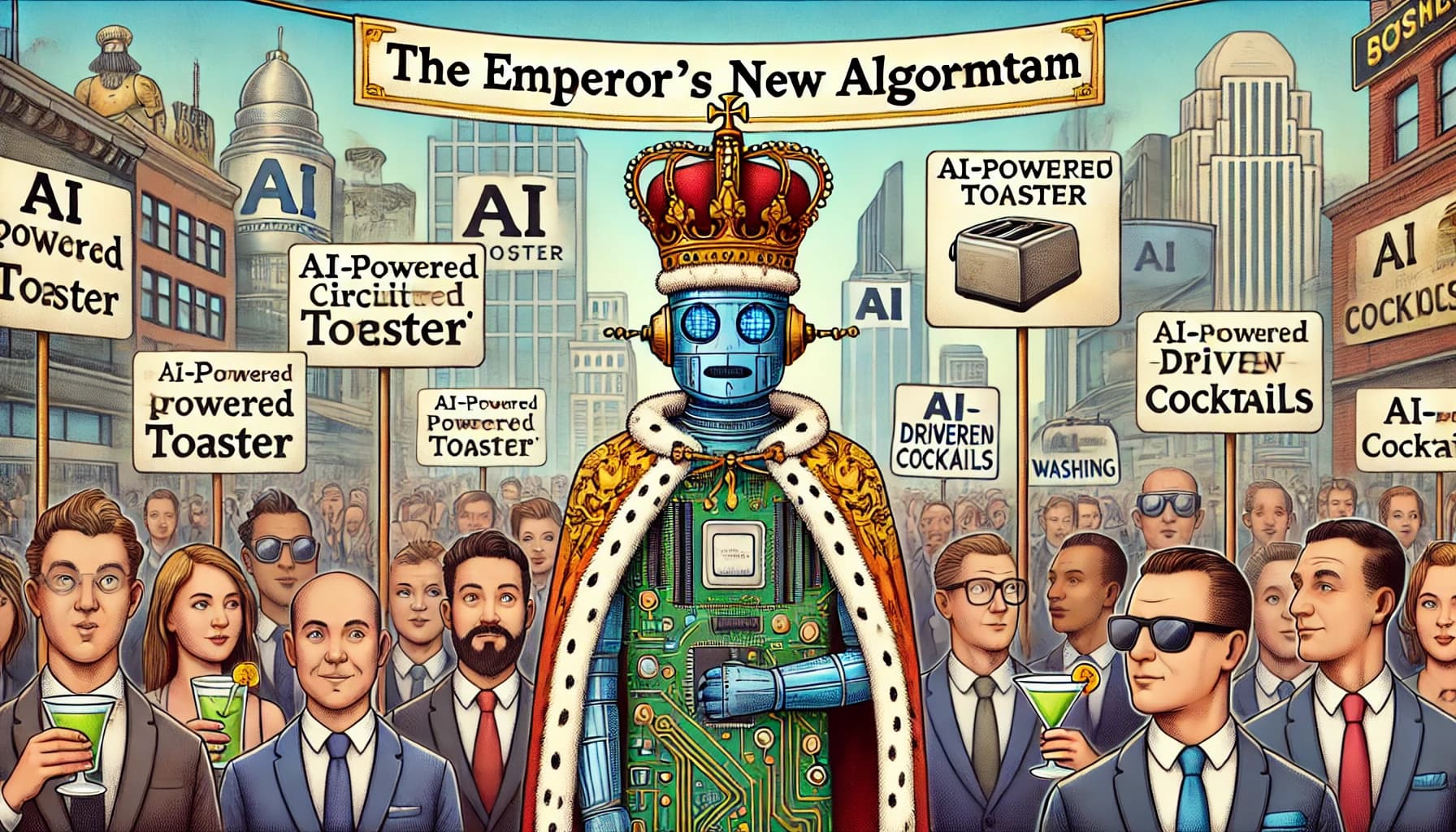
Welcome to the wild, wild west of the tech world, where everyone and their dog claims to be "AI-powered." AI washing is the marketing equivalent of selling air. It's when companies adorn their products with the glittering "AI" tag without any real substance behind it. A significant portion of these so-called innovations lack substantive AI backing, and the problem is only growing as the hype intensifies.
Defining AI Washing
AI washing refers to marketing tactics that attach "AI" branding without genuine technological substance. Companies label basic automated systems -- anything with conditional logic -- as artificial intelligence. Simple if-then rules, basic automation, and rudimentary data lookups get dressed up in AI terminology and sold as revolutionary breakthroughs. Your smart clock that adjusts brightness based on time of day? That's a timer with a light sensor, not artificial intelligence.
The Chatbot Charade
Here's where things get particularly egregious. Companies claim revolutionary status simply for integrating ChatGPT APIs into their products. Using an API doesn't mean your app is now an AI masterpiece. It just means you know how to copy-paste some code. A cocktail recipe recommendation bot serves as a perfect example of superficial AI application marketed with unwarranted significance. Yes, it's a fun feature. No, it's not a breakthrough in artificial intelligence.
The Nuance: Legitimate AI Integration
To be fair, even basic AI features can provide genuine value when appropriately contextualized. Simple automated features represent legitimate starting points on longer innovation journeys rather than endpoint achievements. The problem isn't using AI tools -- it's the disconnect between marketing claims and actual capability. Honesty about where you are on the AI maturity spectrum builds far more credibility than inflated promises.
Genuine AI Use Cases
Healthcare and financial fraud detection exemplify authentic AI applications. These domains demonstrate measurable improvements in diagnostics, personalized treatment plans, and security that genuinely improve outcomes. When AI is applied to complex pattern recognition across massive datasets with life-or-death stakes, the technology earns its label. The contrast with novelty applications could not be sharper.
The Business Case for Honest Implementation
Transparency regarding AI capabilities and limitations builds customer trust more effectively than hyperbolic marketing. Admit the limitations of your AI and focus on the real value it brings. Customers who understand what your technology actually does -- and what it doesn't -- become more loyal advocates than those who discover the gap between promise and reality on their own.
The Future: Beyond the Hype
The future of AI is not in the buzzwords but in the solutions that address real problems. Moving beyond marketing-driven AI washing toward solutions that create genuine value requires discipline, honesty, and a commitment to substance over style. Build meaningful applications rather than headline-generating gimmicks. The companies that will lead the next era of AI are those building real capability, not those with the best marketing copy.
Get insights like this delivered
Join leaders navigating AI governance and agentic systems.