Athletes and Stewards
Every company I walk into right now is having the same argument. Do we hire AI people, or do we upskill our domain people? Should the AI lead come from outside, or should we elevate someone who already knows the business? Build a central team, or embed?
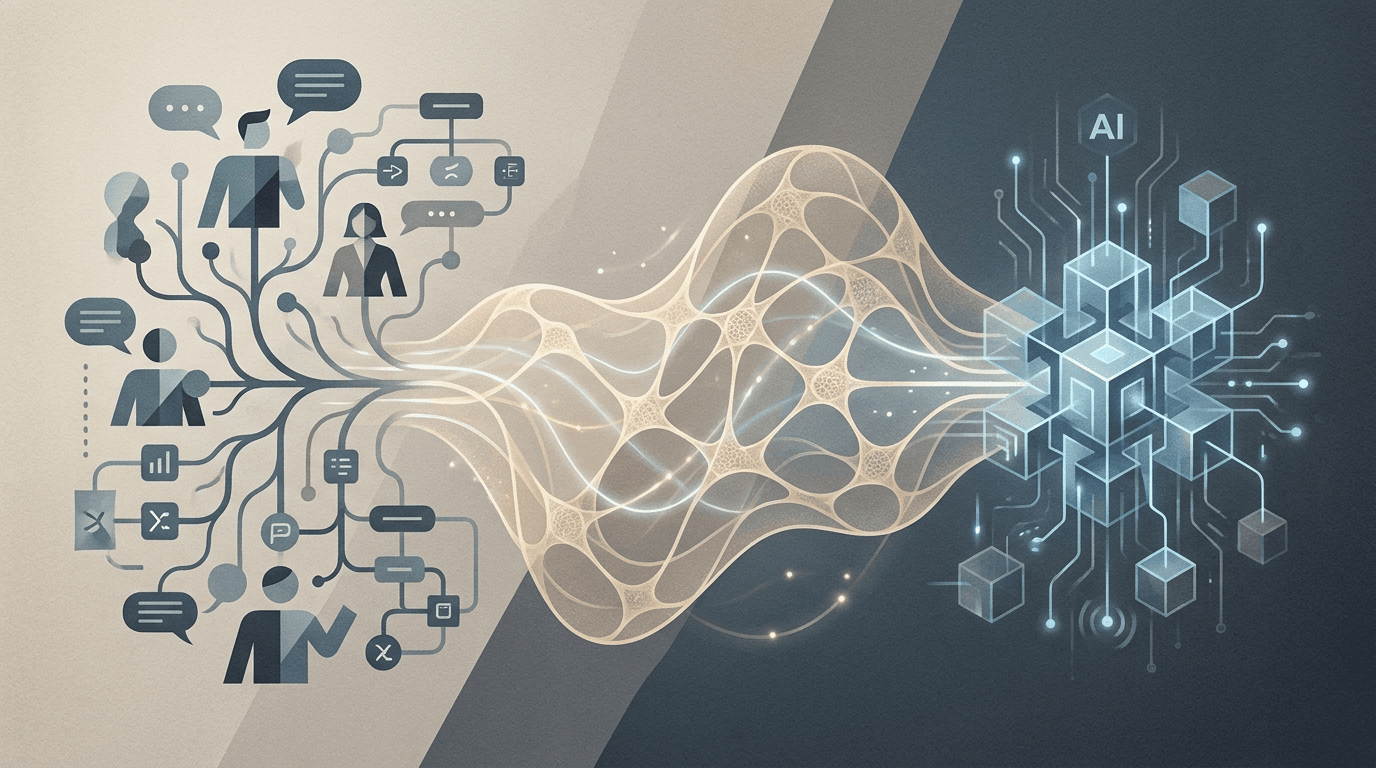
The argument is real. The framing is almost right. There are two roles, not one. But the second one — what most still call the domain expert — has quietly become something more demanding. The expert is now also the steward of the context the AI is reading from.
The two roles: athletes and stewards. The steward is the domain expert under a clearer mandate.
Athletes — the AI generalists
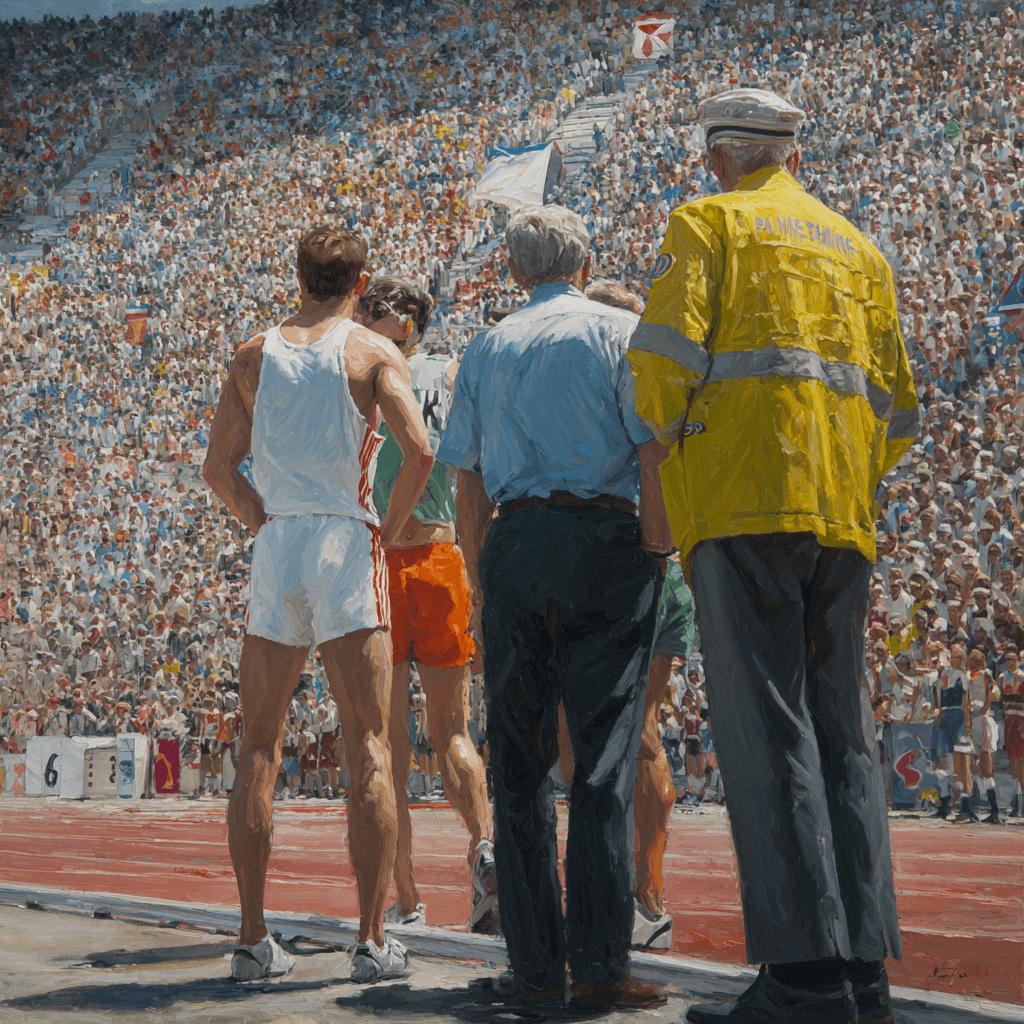
Athletes are the people who can sit down with any model, any tool, any new release, and ship something useful by the end of the week. They don't have a domain. They have a metabolism.
You see them on every transformation. They're the ones cloning the new repo on the day it drops, building the prototype before the executive committee has finished debating the strategy, switching from one framework to another mid-quarter without grieving. The half-life of their tools is measured in weeks. They don't care.
What they're good at:
- Compression. Turning a vague request into a working artifact in days, not months.
- Substitution. When the tool stack shifts, they re-platform without ceremony.
- Range. They'll work on a customer support agent on Monday and a finance copilot on Thursday and produce both.
What they're bad at:
- Domain truth. They don't always know when the demo is wrong. The numbers look right, the model sounds confident, the actual business meaning is off by a unit or a year.
- Patience. The systems that matter take longer than they want to give.
- Institutional memory. They build five things in a quarter and ship none of them all the way.
Most companies hire athletes first because the work is visible. Demos, dashboards, prototypes. The optics are good. The risk is a portfolio of experiments and no production system anyone trusts.
Stewards — the domain expert with new teeth
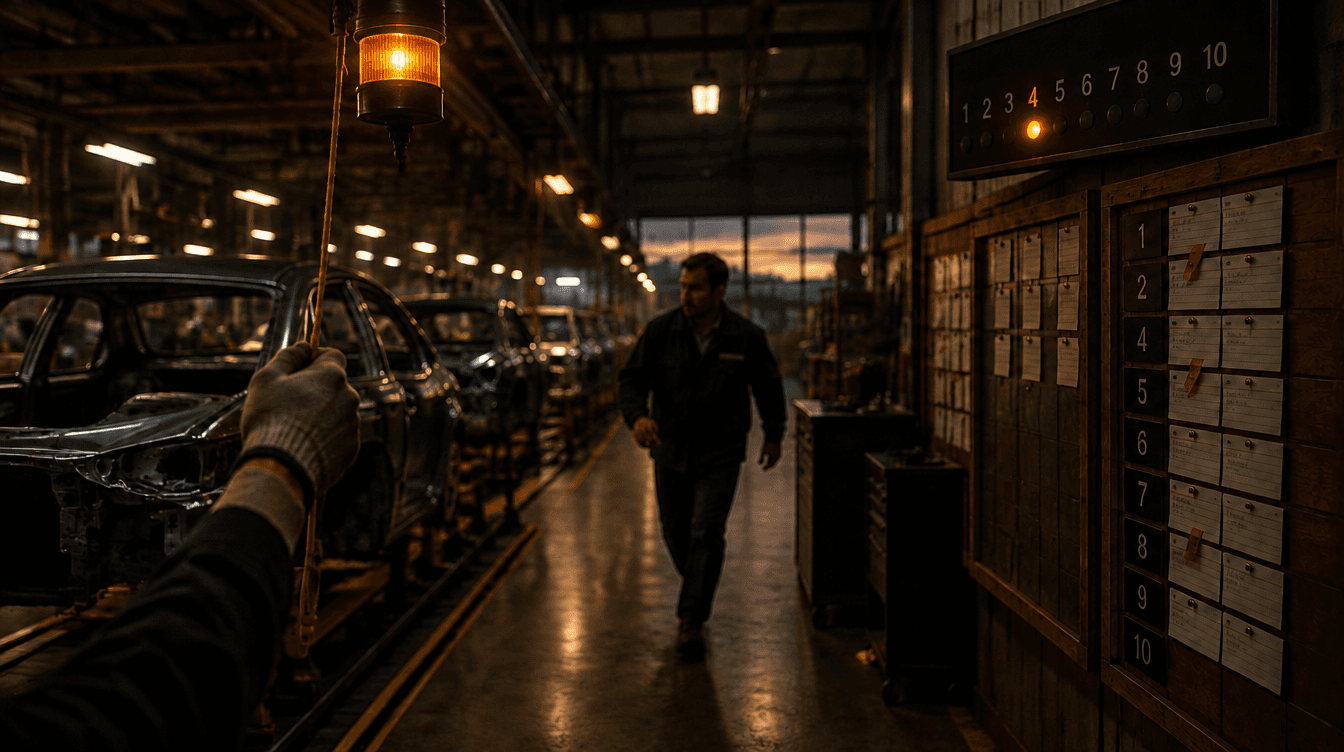
Stewards are the people who knew the business cold before AI showed up. The credit officer who can smell a bad loan. The actuary who knows which assumptions matter. The clinician who can spot a wrong dosage. The supply chain planner who has seen this disruption pattern three times.
They've learned enough about AI to direct it instead of being directed by it. They're not training models. They're not writing prompt scaffolding from scratch. But they can look at an output and tell you, in two seconds, whether it's right, plausibly wrong, or dangerously wrong.
That part of the job hasn't changed. What has changed is that the same person now has to own the context the AI is reading from. The policies, the schemas, the canonical documents, the metadata that decides what's current and what's superseded. The corpus the model walks through every time it produces an answer in their domain.
In The AI Executive's Handbook I made the case that ownership of AI inside a firm has to be assigned by domain expertise, not by technical capability. In the ContextNest white paper I went further. The architectural piece is hierarchical context stewardship: documents have stewards, folders have stewards, tags have stewards, with an admin backstop. The hierarchy resolves top-down, the same way real organizations already work.
The stewards at every meaningful level of that hierarchy are domain experts. The credit officer who owns the underwriting policy is the steward of the underwriting context. The clinical informaticist who owns the protocol library is the steward of the protocol context. The asset management lead who owns the canonical view of the portfolio is the steward of the portfolio context. The expert and the steward are the same person. The only thing that has changed is that the steward role is now load-bearing in a way it wasn't before.
What stewards are good at:
- Calibration. They know when the model is hallucinating because they know what truth looks like in their domain.
- Edge cases. They can name the ten ways this will fail in production because they've watched humans fail those ten ways for a decade.
- Provenance. Once they accept the role, they can tell you which version of the policy is current, which has been superseded, and why.
- Trust transfer. When the steward blesses a system, the rest of the organization moves.
What stewards struggle with:
- Reach. They scale linearly. There's only one of them per domain, and their attention is finite.
- Tooling churn. When the AI stack rebuilds itself every quarter, they're not the ones rewriting their own workflows.
- The new mandate. Most domain experts don't yet see governance and curation of their context as part of their job. They think it's IT's problem, or compliance's, or some yet-unnamed function. It isn't. It's theirs.
The companies that figure this out fast give stewards time, budget, and authority for the curation side of the role explicitly. The companies that don't end up with experts who validate AI outputs once a quarter and never touch the underlying corpus — which means the corpus rots, and within two cycles the AI is confidently citing things nobody would have approved.
Why two, not three
A reader of an earlier draft of this asked where a separate "context steward" sits in the org. The honest answer is: nowhere new. The steward is the expert. The hierarchical stewardship model in the white paper looks like a separate role only if you read the diagram without reading the names attached to it. Document stewards are the people who own the document — usually a domain author or lead. Folder stewards are domain leads. Tag stewards are cross-cutting experts (the compliance officer for #compliance, the security architect for #security). The admin role is a thin generalist backstop, not a third pillar.
Treating stewardship as a third hire is how you end up with a knowledge management function that nobody respects, sitting between IT and the business, owning a process nobody routes to. The right move is the harder move: tell your domain experts that this is part of their job now, and pay them like it is.
The interplay
Each role on its own has a failure mode:
| Configuration | What you get |
|---|---|
| Athletes only | Portfolio of demos. Nothing in production. Vendor sprawl. |
| Experts without the steward mandate | AI outputs that look right but drift over time. Trust erodes by year two. |
| Stewards without athletes | Beautifully governed knowledge nobody has built a system on top of. |
| Athletes + stewards | Athletes ship. Stewards validate AND keep the corpus clean. The loop compounds. |
The interplay matters more than the labels. Athletes prototype on a dataset; the steward decides which version of that dataset is canonical. Athletes wire a new agent; the steward defines what "right" looks like AND owns the metadata that controls what context that agent is allowed to see. The two roles aren't a hierarchy. They're a feedback loop.
How to staff it
If you're building this from zero, the rough order I'd recommend:
- One athlete first. Visible velocity. They prove the system can move. Don't hire an army yet.
- Two or three stewards engaged early, not as full-time AI roles, but with explicit stewardship in their charter. Their sign-off is load-bearing. Their ownership of the context — the policies, the schemas, the canonical documents — is named. Pay them for the time.
- A thin admin backstop. One person who owns the spaces no domain steward claims, plus tooling administration. Not a role you scale up; a role that stays small on purpose.
After that you scale based on which role is the bottleneck. In year one it's athletes — you don't have enough hands. In year two it's stewards — you have systems running but the corpus is drifting and nobody is curating. The fix is not to invent a new role. The fix is to give your stewards the time, authority, and recognition the curation side of the job actually requires.
A note on titles
You don't have to call them "athletes." Most organizations won't. Use whatever titles fit your culture — AI engineer, applied AI, AI product lead. And don't invent a title for the steward; the steward is the domain expert already in seat, under their existing title, with a clearer mandate.
The point is that there are two distinct jobs, the second one has grown teeth, and most companies are still acting like it hasn't. Build the structure. Then hire — and re-charter — to it.
Get insights like this delivered
Join leaders navigating AI governance and agentic systems.