Disrupting Borders and Boundaries: AI and LLMs as Game-Changers for Global Collaboration

In an increasingly fracturing world, language and cultural barriers continue to impede genuine global collaboration. The challenges are well-documented, from multinational corporations grappling with effective supply chain operations to financial institutions seeking to expand their footprint in foreign markets. Yet, the rapid advancements of Artificial Intelligence (AI) and Language Learning Models (LLMs) may finally present a meaningful utility for increasing cross-border efficacy.
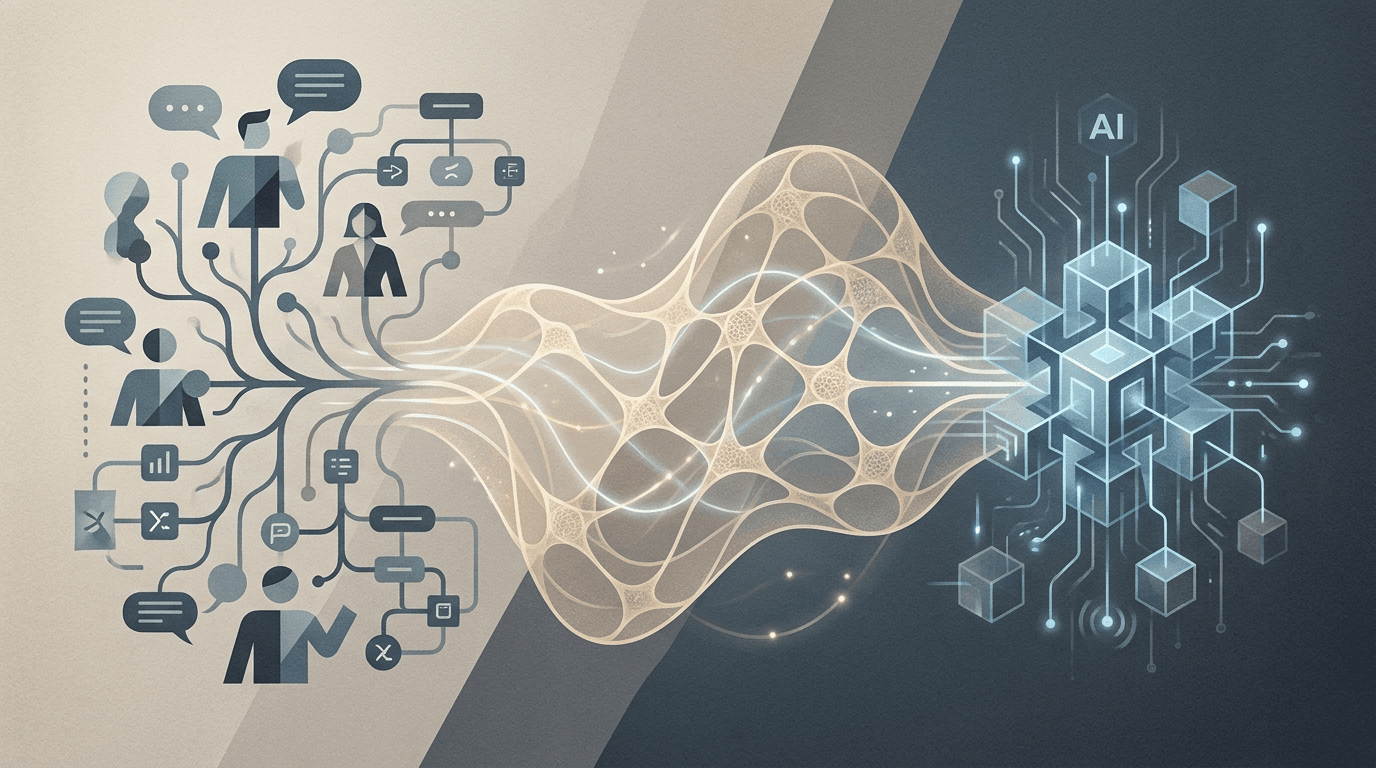
AI and LLMs have erupted onto the technological landscape, heralding a future where communication extends beyond the simple use of a common language. They promise to bridge the communication gap, not just by providing accurate translation services but by understanding and interpreting the nuances of culture and context. The implications are immense, particularly for industries that operate with a high global footprint.
Supply Chain: Bridging the Global Disconnect
Companies operating in far-flung locations around the world often struggle with the disconnect caused by incomplete understanding of languages and cultures. Strategists spend massive amounts of consulting dollars centralizing and decentralizing, matrixing and re-matrixing global operations to reduce friction and risk, but no organizational structure solves the problem of cross-border or cross-cultural risk -- it merely mitigates the opportunities for such risks to impact outcomes.
Imagine a world where communication is no longer dictated by the limitations of individual human experience and bias, but empowered by the capabilities of AI and LLM systems. Communication could be streamlined without the fear of misunderstandings compromising efficiency or profits. Harnessing AI and LLMs could bring a level of coordination and reduced friction unachievable by the limited capacities of human translators.
Real Estate and Private Equity
In real estate and private equity, language and cultural misunderstandings can bungle deals or cloud transparency. The nuance of language and the influence of cultural context can make or break an investor's confidence. By employing AI and LLMs, potential investors can secure more nuanced insights into social and economic contexts, a level beyond what traditional analysis could provide.
Avoiding Cultural Missteps
Consider the famous Chevrolet Nova example. Its infamous launch in Mexico faltered because "no va" in Spanish translates to "doesn't go" -- a significant oversight that could have been avoided with the right cultural context. Adopting AI and LLMs could help multinational companies avoid such blunders and ensure their messages resonate, irrespective of language or cultural boundaries.
Beyond Mistake Prevention: The LLMisation of Global Communication
Even in a climate where some countries lean towards protectionism, these models can be used to hone and sharpen communication and create opportunities in ways previously unavailable to most firms. An executive or deal maker could pass all communication through a cultural understanding filter, one that could translate the nuances of their communication back to them and allow them to tweak those nuances before proceeding more intentionally. Much like containerization revolutionized global trade of goods, "LLMisation" could do the same for the global flow of ideas and communication in a knowledge-based economy.
Caveats and Responsibilities
The technologies are not a panacea, but they offer a considerable advantage in engaging, understanding, and connecting with a global audience. There are inherent risks: ethical dilemmas, data privacy concerns, and potential job displacement. Thought leaders, executives, and board members must guide the evolution of these technologies, ensuring they are harnessed ethically and for the benefit of humanity.
Conclusion
While AI and LLMs are still burgeoning technologies, their potential for revolutionizing global collaboration is undeniable. In this era of increasing interdependence and connectivity, the ability to understand and transcend language and cultural barriers is pivotal. AI and LLMs represent game-changers, and in their wake, borders and boundaries may become relics of the past.
Get insights like this delivered
Join leaders navigating AI governance and agentic systems.